Event
ChatGPT can’t make my pasta sauce
How three Amsterdam restaurant operators are leveraging AI to run a more efficient business.
•
10 min
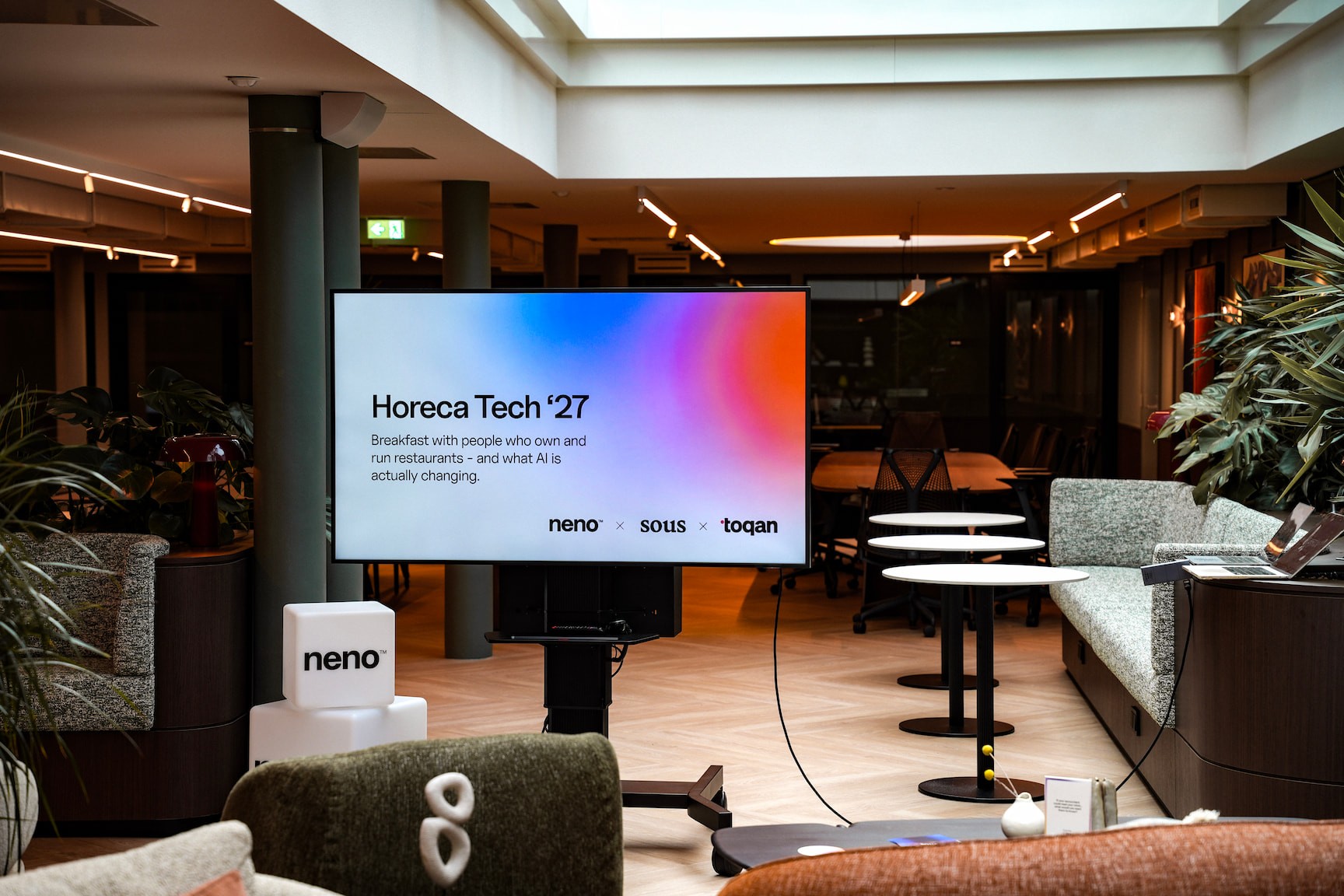
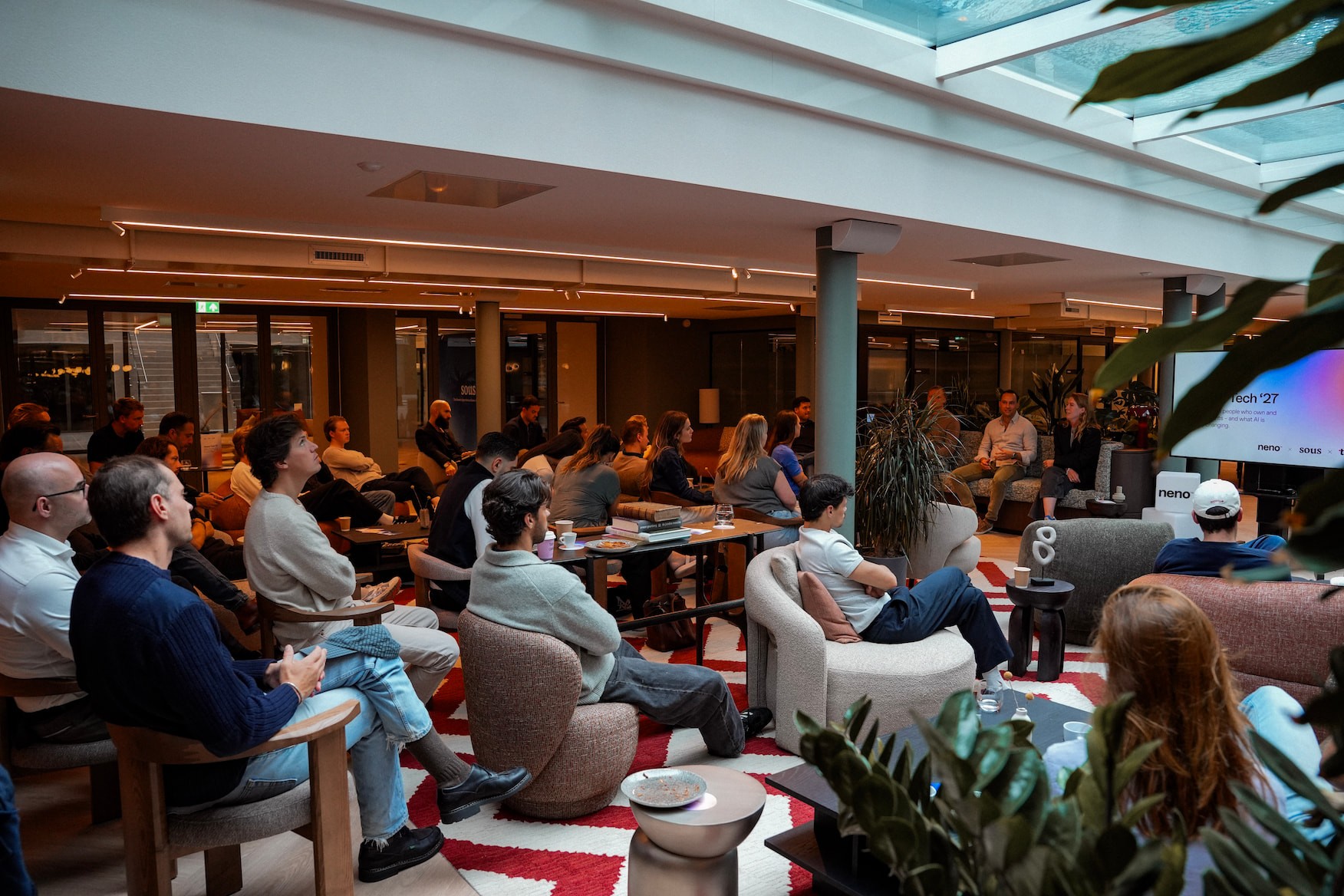
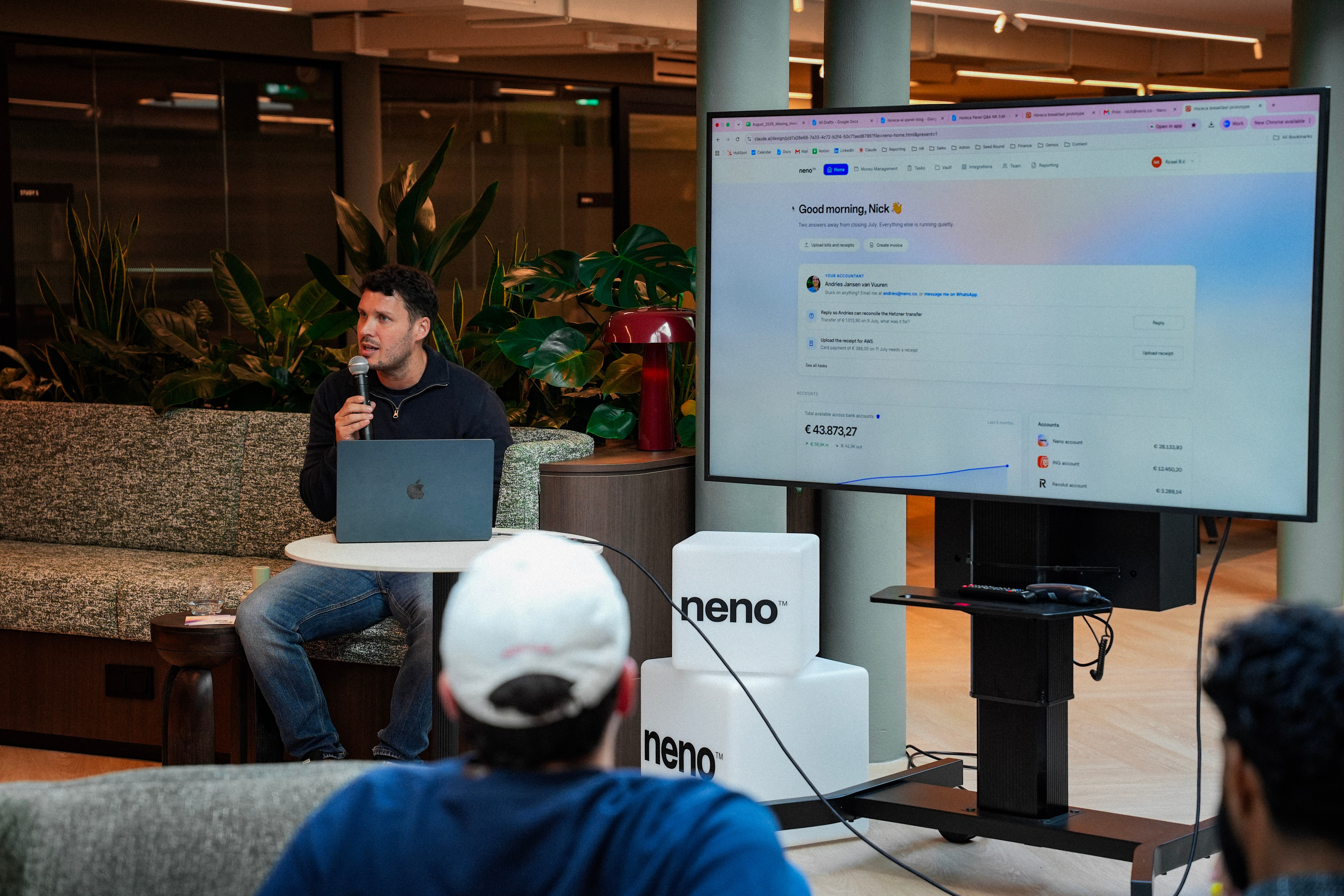
At Neno’s Horeca Tech & AI Breakfast, organised together with SOUS and Toqan, Eva Akkerhuis of Lebkov & Sons, Francesco Vauban of Scarpetta and Ruben Joseph Ramspeck of Club Birdies shared how they are using AI and emerging hospitality technology in their businesses. The event brought together a curious community of restaurant operators from RCE, Pillows Hotels, Group 212, Market 33, Market 27, Capital C and many more.
They are not doing so with some distant future in mind or as an experiment without a clear purpose. They are using it right now to understand margins, improve staff scheduling, find new customers and remove repetitive work from their week.
Each of them started from a different place. Eva wanted better answers from her operational data. Francesco wanted to build smarter processes behind Scarpetta. Ruben discovered that customers were already using ChatGPT to decide where to go. Three operators, three very different businesses and one shared lesson: the most useful applications of AI do not start with the technology. They start with a real problem.
Eva Akkerhuis: running the numbers with Toqan
Eva grew up in her family’s restaurant business and started working on the floor from a young age. Since then, she has been involved in almost every part of the operation, from opening new locations to improving how the kitchens work. She was also the person who replaced estimated portions with gram-measured, colour-coded scoops. It says a lot about how Eva approaches the business: she wants to understand what is happening, make it measurable and use that information to improve the operation.
So when Eva talks about AI, she is not interested in the technology in the abstract. She wants to know whether it can help her make better decisions. She started experimenting with ChatGPT in early 2023, shortly after a friend introduced her to it. Although it showed her what generative AI could do, it did not immediately become part of her daily work. That changed when she started using Toqan.
Today, Eva uses Toqan almost every day to prepare management meetings, analyse EBITDA and margins, test pricing decisions and understand how changes in costs or sales could affect the performance of a location. One analysis revealed that one type of bread was selling roughly three times as well as an alternative. It sounds like a small detail, but it gave the team a clear purchasing decision they could act on immediately.
That is where Eva sees the real value of AI. A general chatbot can give you information, but a tool that understands enough about your business can help you decide what to do next. What happens if we increase prices? Why is one location missing its margin target? How much additional revenue would be needed to close the gap? Questions like these would traditionally require data to be collected from several systems and analysed manually. Eva can now investigate them more quickly and move from a question to a possible action within the same working session.
She is also working on one of hospitality’s more complicated problems: staff scheduling. Historical sales and labour data can help predict how many people may be needed, but a real schedule also depends on employee availability, last-minute sickness and what is happening inside each individual location. AI can create a better starting point, but experience and human judgement are still needed to make it work in practice.
“If you have a question and you don’t know where to start, just ask the question.”
You do not need to understand every model or write the perfect prompt. Start with something inside the business that you already want to understand.
Francesco Vauban: building the ‘Scarpetta Brain’ with Claude
Before opening Scarpetta, Francesco built Fresh Pasta Lab, a catering and supply business that grew from serving one restaurant to sixteen within a year. During that process, he noticed a gap in the market. People in the Netherlands love Italian food, but eating good pasta usually means sitting down, waiting and paying full restaurant prices. Scarpetta became his answer: fresh pasta served quickly, including in reusable glass jars that helped the brand stand out. The jars were practical, but they also became an unexpected marketing tool that people remembered and shared.
That practical and experimental mindset also shapes the way Francesco uses AI. He began with ChatGPT for fairly simple tasks, such as writing marketing content, researching possible locations and working through questions about Scarpetta’s business plan. As he learned more about the tools, his use of them became more ambitious. Today, he mainly uses Perplexity for research and Claude for operational work, bringing those applications together in what he calls the ‘Scarpetta Brain’.
The Scarpetta Brain is not one automated system that runs the entire restaurant. It is an internal knowledge and workflow environment built around Scarpetta’s staffing rules, processes, inventory requirements and ways of working. Francesco compares the process to teaching someone with enormous potential but no knowledge of the company. The technology may be capable, but it first needs to understand how Scarpetta operates. The better the context, the more useful the answer.
By giving Claude Scarpetta’s planning rules and screenshots of team availability, he can generate a first version of the weekly schedule. He still enters the final schedule into the planning platform himself, but the process saves him between three and four hours of repetitive work each month.
Inventory is the next major challenge. Holding too much stock ties up cash and can create waste, while holding too little means risking unavailable products during busy periods. Francesco wants to connect his system more directly to Lightspeed and, eventually, Scarpetta’s suppliers. With access to actual sales and consumption data, AI could help identify what is in stock, what has been used and what needs to be ordered. It could also analyse historical sales data to identify the busiest periods and improve staffing decisions.
The goal is not to remove people from the restaurant. AI cannot prepare the pasta, make the sauces or serve the customers. Francesco wants it to take care of more of the repetitive work around those activities, so his team can focus on the parts of the business that customers actually experience.
When it came to financial administration, Francesco shared exactly what he expects from his accounting, payroll and tax team:
“I expect them to take care of everything, with minimal friction. I want the books closed on time, clear visibility into our cash flow and the confidence that our financial administration is simply handled.”
Since Scarpetta became a Neno customer, Neno has carved out a sweet spot in the restaurant sector by delivering exactly that: up-to-date books, clear cash-flow reporting and financial administration that is handled accurately and on time.
Ruben Ramspeck: getting found through ChatGPT
Club Birdies did not open overnight. Ruben spent five years trying to bring the concept to life, working through three possible locations, several groups of partners and an eighteen-month licensing process before Amsterdam’s first indoor golf venue could finally open its doors. His mindset throughout that journey was straightforward: keep going, learn from every rejection and try again.
Ruben is also open about not having a technical or traditional academic background. He often knows what he wants to build or communicate, but putting all the information into a structured plan does not always come naturally. That is where AI first became useful to him. ChatGPT gave him a place to organise his ideas and improve the result by adding more information and feedback. He even used AI to help build a business plan for a mini-golf concept, which he later presented to an investor.
But the moment that changed how Ruben thought about AI’s commercial impact came after Club Birdies opened. Because it is a destination venue rather than a business that depends on passing foot traffic, Ruben regularly asks customers how they discovered it. One customer told him that she had asked ChatGPT what she could do with her father in Amsterdam. Club Birdies appeared as the first recommendation.
For Ruben, that moment changed the conversation. People are no longer only typing keywords into Google; they are asking AI assistants where they should eat, what they should do and which businesses fit their plans. That makes AI search a genuine customer acquisition channel, rather than an interesting future development. It also creates a new visibility challenge: operators need to consider not only how they appear in traditional search results, but also whether AI systems understand what their business offers and when it should be recommended.
Club Birdies now uses SOUS to improve that visibility. The recommendations are practical: publish relevant articles, keep online information up to date, create more short-form video content and consistently respond to customer reviews. Ruben describes it less as another piece of software and more as an adviser that helps his team understand which activities deserve attention and where they may be missing opportunities.
His longer-term ambition goes further. Roughly 30 per cent of Club Birdies’ revenue comes from corporate events, but that demand drops significantly during school holidays. Ruben wants AI to recognise patterns like this before they become visible in the monthly numbers. If a system can combine booking data, customer behaviour, weather and historical demand, it could suggest which audiences to target, what type of offer to create or whether pricing should change. Ruben would still make the final decision, but the system would bring the opportunity to him.
Three businesses, three approaches, one pattern
What stood out during the panel was not one specific tool or feature. It was how each operator had applied AI to the problem directly in front of them. Eva uses Toqan to understand margins and make faster operational decisions. Francesco uses Claude to reduce the repetitive work involved in inventory management and staff scheduling. Ruben uses SOUS to help Club Birdies appear when potential customers ask AI where they should go.
None of them sees AI as a replacement for staff, experience or judgement. Hospitality is still a human business: food needs to be prepared, customers need to feel welcome and unexpected situations need to be handled by people who understand what is happening in the moment. AI can analyse information, create a first schedule, identify patterns and recommend actions. It can give operators a better starting point, but people still create the experience and make the final call.
The three stories also show why Neno, SOUS and Toqan came together for this conversation. Toqan helps operators bring their business knowledge and data together so they can analyse performance and make informed decisions. SOUS helps hospitality businesses improve how they are discovered and build stronger relationships with their customers.
At Neno, we focus on the financial operation behind the business. We bring accountancy, tax, payroll and business banking together in one platform, using AI to remove repetitive financial work and give operators faster access to the numbers they need. That means less time spent chasing documents, moving between systems and waiting for reports, as well as faster insight into margins, payroll costs, cash flow and the performance of individual locations.
The applications are different, but the goal is the same: giving hospitality entrepreneurs more control over their business and more time for the work that requires a human touch. The operators who benefit first will not necessarily be the ones using the most advanced technology. They will be the ones willing to identify a real problem, provide the right context and start experimenting.

Written by
Nick Knuppe
CEO & Founder