Finance
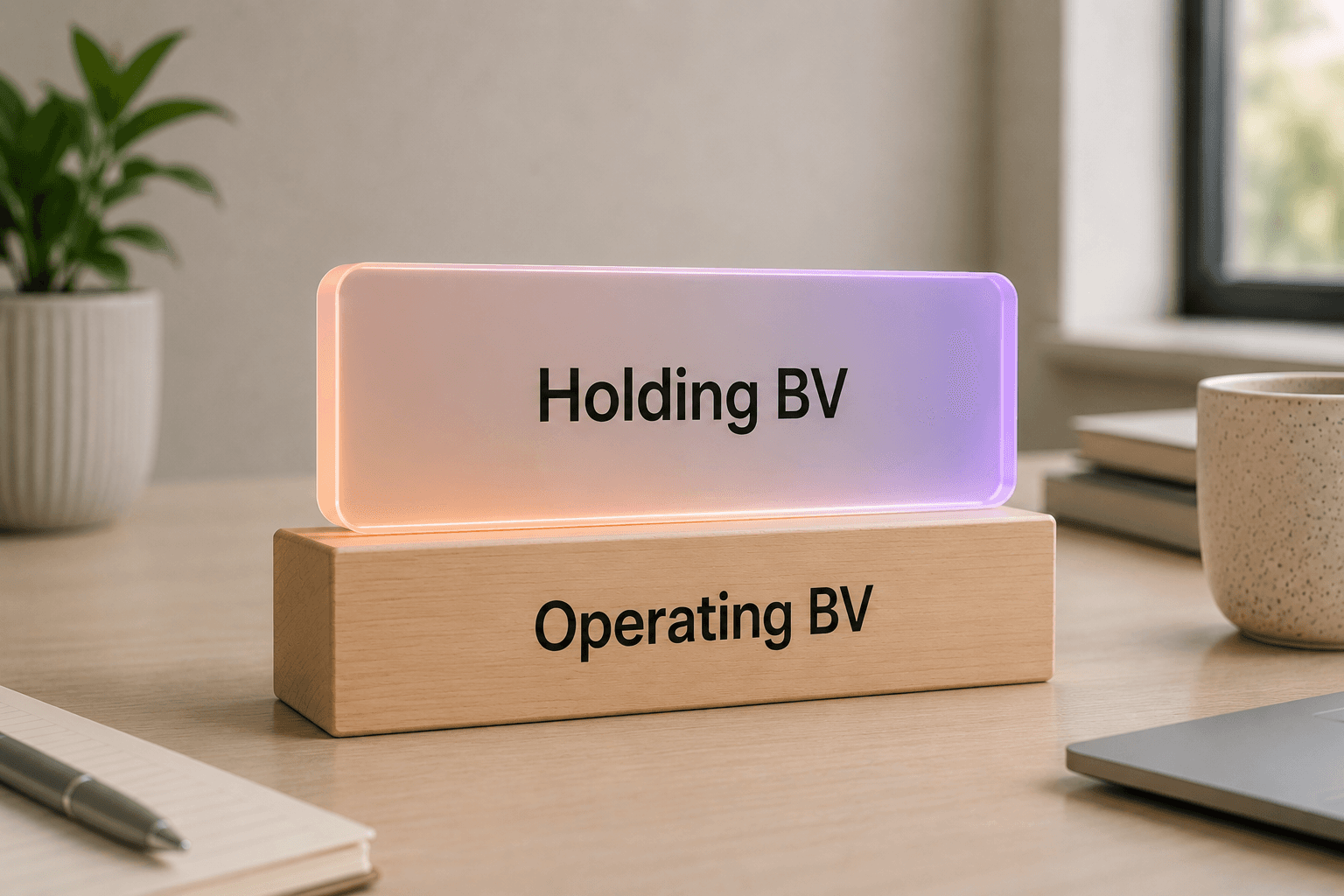
Belangrijkste verschillen tussen een holding-BV en een operationele BV
Belangrijkste verschillen tussen een Holding BV en een Werkmaatschappij BV in Nederland. Hoe BV-structuren invloed hebben op belastingen, risico, salarisadministratie en hoe je jezelf uitbetaalt.
•
23 min
Intro
Een bv oprichten: één bv of een holdingstructuur?
Bij het oprichten van een bv is een van de eerste keuzes: ga je voor één bv, of kies je voor een holdingstructuur?
Bij een holdingstructuur werk je met:
Een holding-bv (de moedermaatschappij)
Een werkmaatschappij (de bv waarin je dagelijkse activiteiten plaatsvinden)
Deze keuze heeft direct invloed op:
Risico en aansprakelijkheid
Belastingen en winstuitkering
Complexiteit van je administratie
Inrichting van je salaris als dga
Korte definities
Wat is een holding-bv?
Een holding-bv is een bv die aandelen houdt in één of meerdere andere bv’s, zoals een werkmaatschappij.
Vaak worden in de holding ook zaken ondergebracht zoals:
Winst en reserves
Investeringen
Intellectueel eigendom (IP)
De holding kan daarnaast een managementvergoeding rekenen aan de werkmaatschappij.
Wat is een werkmaatschappij (werk-bv)?
De werkmaatschappij is de bv waarin de dagelijkse activiteiten plaatsvinden.
Hier werken medewerkers
Hier worden contracten gesloten met klanten
Hier draait de operatie
Ook ligt hier het grootste deel van het zakelijke risico, zoals aansprakelijkheid en claims.
Belangrijk verschil
De holding bezit en beschermt waarde.
De werkmaatschappij voert de operatie uit en draagt het risico.
Onderwerp | Holding BV | Werkmaatschappij |
|---|---|---|
Rol | Houdt aandelen, beheert vermogen en kan managementdiensten leveren | Voert de dagelijkse activiteiten uit en genereert omzet |
Risico | Meestal beperkt (bij juiste structuur) | Hoger, hier zit het operationele en juridische risico |
Winst | Ontvangt dividend en/of managementvergoeding | Genereert winst uit de bedrijfsactiviteiten |
Personeel | Vaak alleen de dga (of geen personeel) | Hier zijn medewerkers meestal in dienst |
BTW-positie | Afhankelijk van activiteiten (actief vs passief) | Meestal reguliere btw-ondernemer |
Financiering | Kan geld uitlenen en reserves aanhouden | Werkt met werkkapitaal, vaak gefinancierd door holding |
Verkoop | Structuur maakt verkoop van werk-bv eenvoudiger | Dit is meestal de bv die wordt verkocht |

Waarom kiezen ondernemers voor een holdingstructuur
Risicospreiding en bescherming van vermogen
Een van de belangrijkste redenen is het scheiden van risico en waarde.
Waardevolle assets zoals cash, IP en investeringen zitten in de holding
Operationeel risico zit in de werkmaatschappij
Bij problemen in de werkmaatschappij blijft het vermogen in de holding vaak buiten schot, mits de structuur goed is ingericht en je zakelijk handelt tussen de bv’s.
Flexibiliteit voor groei
Met een holdingstructuur kun je eenvoudig uitbreiden.
Nieuwe activiteiten? Voeg een extra werk-bv toe
Geen vermenging van verschillende business lines in één entiteit
Dit maakt je structuur overzichtelijk en schaalbaar.
Meer flexibiliteit bij verkoop
Een holdingstructuur maakt een exit vaak eenvoudiger.
Je kunt de werkmaatschappij verkopen
De holding (en andere assets) blijven behouden
In veel gevallen speelt de deelnemingsvrijstelling hierbij een belangrijke rol.
Fiscale aandachtspunten (voor je begint)
Dit is algemene informatie en geen persoonlijk belastingadvies.
Vennootschapsbelasting (VPB)
Elke bv is in principe zelfstandig belastingplichtig.
Iedere bv doet een eigen aangifte
Meer administratie, maar ook meer mogelijkheden voor fiscale planning
Fiscale eenheid (VPB)
In sommige situaties kun je een fiscale eenheid aanvragen.
Winsten en verliezen binnen de groep worden samengevoegd
Verliezen kunnen sneller worden verrekend
Maar let op: hier zitten voorwaarden en gevolgen aan, zoals gezamenlijke aansprakelijkheid en extra compliance.
Praktische takeaway
Heb je meerdere bv’s en maakt er één verlies terwijl een andere winstgevend is?
Dan kan een fiscale eenheid interessant zijn om sneller belastingvoordeel te realiseren.
Maar het is geen standaardkeuze — laat dit altijd goed doorrekenen.
Dividend van werk-bv naar holding: deelnemingsvrijstelling
Als je holding een kwalificerend belang heeft in de werkmaatschappij, zijn dividenduitkeringen en verkoopwinsten meestal vrijgesteld van vennootschapsbelasting via de deelnemingsvrijstelling.
Praktisch betekent dit:
Winst kan van de werk-bv naar de holding worden uitgekeerd zonder extra belasting op holding-niveau (in de meeste gevallen).
Dit is vaak een van de belangrijkste redenen om met een holdingstructuur te werken.
Jezelf uitbetalen: dga-salaris
Als eigenaar van een bv ben je meestal dga (directeur-grootaandeelhouder).
Daarbij gelden de regels voor het gebruikelijk loon.
Richtbedrag 2026: circa €58.000
Belast in box 1 (loonbelasting en premies)
Het exacte bedrag hangt af van wettelijke vergelijkingen
Waar betaal je jezelf uit?
Veel ondernemers betalen zichzelf vanuit de holding:
Via een managementovereenkomst
Met een managementvergoeding vanuit de werk-bv
Maar uitbetalen vanuit de werk-bv kan ook, afhankelijk van je structuur.
BTW: vaak complexer dan gedacht
BTW is een van de meest onderschatte onderdelen van een holdingstructuur.
Fiscale eenheid voor de BTW
Als je een fiscale eenheid voor de btw vormt:
Doe je één gezamenlijke btw-aangifte
Breng je geen btw in rekening op onderlinge diensten (zoals managementfees)
Belangrijke wijziging (per 1 juli 2025)
Sinds 1 juli 2025 zijn de regels rondom holdings aangepast.
Dit heeft invloed op:
Wie kan deelnemen aan een btw-fiscale eenheid
Wanneer btw aftrekbaar is
Het onderscheid tussen een actieve en passieve holding
Checklist voor ondernemers
Is je holding passief (alleen aandelen) of actief (met managementdiensten)?
Trek je btw af op kosten in de holding (advies, overnames, IP)?
Heb je een btw-fiscale eenheid nodig om btw-lekkage te voorkomen?
Boekhouding en administratie: wat verandert er?
Twee bv’s = twee administraties
Met een holdingstructuur werk je altijd met minimaal twee administraties:
Twee aparte boekhoudingen
Twee bankrekeningen
Twee jaarrekeningen en aangiftes (in de meeste gevallen)
Zelfs met een fiscale eenheid blijven het juridisch aparte entiteiten.
Die moeten dus ook apart worden bijgehouden.
Intercompany-transacties moeten kloppen
Transacties tussen je holding en werkmaatschappij moeten goed worden vastgelegd.
Veelvoorkomende voorbeelden:
Managementvergoeding (holding → werk-bv)
Intercompany lening
Vergoeding voor IP
Kostenverdeling (software, kantoor, verzekeringen)
Zonder goede vastlegging loop je risico op:
Problemen bij de jaarafsluiting
Fouten in je btw-aangifte
Discussie over het zakelijke karakter van transacties
Salaris en payroll: hoe richt je dit in?
Wie is waar in dienst?
Je moet duidelijke keuzes maken:
De dga is vaak in dienst van de holding
Medewerkers zijn meestal in dienst van de werk-bv
Dit heeft invloed op:
Loonheffingen en registraties
Arbeidsovereenkomsten
Waar kosten en risico’s liggen
Managementvergoeding vs salaris
Als de dga op de payroll van de holding staat:
Betaalt de werk-bv vaak een managementvergoeding aan de holding
Deze dekt salaris, werkgeverslasten en overhead
Let op: zonder btw-fiscale eenheid kan hierover btw verschuldigd zijn.
Veelvoorkomende structuren
1. Eén bv
Geschikt als:
Je een eenvoudige onderneming hebt
Risico beperkt is
Je kosten en administratie laag wilt houden
Nadeel: minder flexibiliteit voor groei, verkoop of risicospreiding
2. Holding + werkmaatschappij
Geschikt als:
Je risico wilt scheiden
Je vermogen wilt opbouwen en beschermen
Je groei, investeringen of een exit verwacht
Nadeel: meer administratie, meer afstemming (btw, payroll, structuur)
Wat moet je vooraf beslissen?
Voordat je een structuur opzet, denk na over:
Heb je nu al behoefte aan risicospreiding?
Ga je vermogen of IP opbouwen in de holding?
Waar komen contracten en medewerkers te zitten?
Hoe ga je jezelf uitbetalen (salaris en later dividend)?
Heb je een btw-fiscale eenheid nodig (en kom je ervoor in aanmerking)?
Verwacht je verkoop binnen 2–5 jaar?
Kun je je intercompany-administratie goed bijhouden?
Veelgestelde vragen
Is een holdingstructuur altijd beter dan één bv?
Nee. Een holding biedt vaak voordelen voor risicospreiding en flexibiliteit, maar brengt ook extra administratie en btw-complexiteit met zich mee, vooral sinds de wijzigingen per 1 juli 2025.
Kan ik winst van de werk-bv naar de holding overbrengen?
Ja, meestal via dividend.
In veel gevallen voorkomt de deelnemingsvrijstelling dat hierover opnieuw vennootschapsbelasting wordt betaald op holding-niveau.
Welk dga-salaris moet ik in 2026 aanhouden?
De Belastingdienst hanteert voor 2026 een richtbedrag van circa €58.000.
Het exacte salaris hangt af van wettelijke vergelijkingen en je specifieke situatie.
Moet ik btw rekenen over een managementvergoeding?
Dat hangt af van je structuur.
Zonder btw-fiscale eenheid: meestal wel btw verschuldigd
Met btw-fiscale eenheid: onderlinge diensten vallen doorgaans buiten de btw

Written by
Nick Knuppe
CEO en oprichter